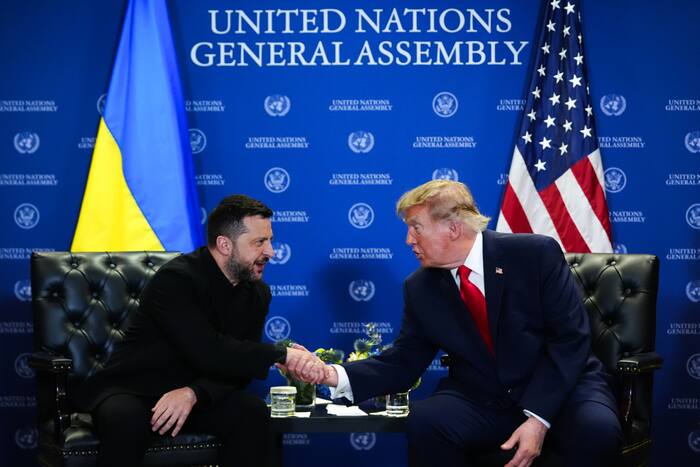
Donald Trump announced an arrangement that allows Russian diesel to flow to world markets again, easing part of the sanctions imposed after the invasion of Ukraine. Moscow responded by lifting a diesel export ban that had been in force since July, with Deputy Prime Minister Alexander Novak saying domestic needs can still be met while agreed volumes go abroad. The volumes involved are described as relatively small, and analysts doubt they will move prices much. Trump has blamed the spike in diesel prices on Ukrainian drone strikes on Russian refineries, even though the US-led war with Iran has pushed global energy costs up.
Ukraine’s defence ministry says its attacks have knocked out more than half of Russia’s refining capacity, creating a fuel crisis inside Russia. Volodymyr Zelenskyy called the deal a display of weakness and said Russia kept hitting Ukrainian energy sites even after Trump declared an energy truce. Trump separately said it was time for Ukraine to have a new president, in what is seen as the lowest point in his relationship with Zelenskyy since the February 2025 Oval Office clash. Kremlin spokesman Dmitry Peskov said contacts on an energy truce are continuing, while Foreign Minister Sergey Lavrov said Zelenskyy does not deserve a respite.
Analysts called the arrangement a gift to Vladimir Putin, and Kyiv fears that easing sanctions without Russian concessions weakens Washington’s leverage. Poland’s foreign minister questioned whether Russia even has enough diesel to supply, pointing to shortages in Moscow. Some Russian motorists worry that exports could leave less fuel at home. For India, a major buyer of Russian crude and a fuel importer, any loosening of Russian diesel flows matters for pump prices and import bills.