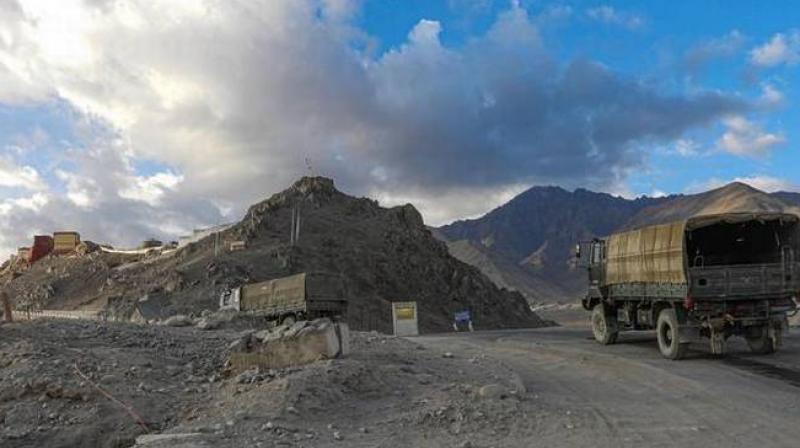
According to India’s Ministry of Defence annual report for 2025-26, China significantly reduced its military deployment along the Line of Actual Control in 2025. The People’s Liberation Army scaled back to about 10 Combined Arms Brigade-sized formations along the LAC, with a similar number in traditional training areas further back. This marks a notable pullback from peak troop levels during the standoff following the 2020 Galwan Valley clashes, when China stationed more than 60,000 troops in the Ladakh sector alone. Meanwhile, the Indian Army’s deployment across all sectors remains robust and prepared to deal with any emerging contingency, as India has not correspondingly drawn down its forward posture.
The report attributed improving relations to diplomatic steps starting with a meeting between Prime Minister Narendra Modi and Chinese President Xi Jinping in Kazan, Russia in October 2024, following the end of the eastern Ladakh face-off. Modi and Xi held further talks at the Shanghai Cooperation Organisation summit in Tianjin in August 2025 and at the BRICS summit hosted by India this month, with both sides stating the border needs essential peace and tranquillity.
Separately, the report highlighted Operation Sindoor for demonstrating India’s multi-domain military capability and prompting a review of force structure, jointness, and technology integration. Despite the Chinese troop reduction, independent assessments continue to flag China’s broader military infrastructure, missile systems, air defence assets, and armour as unresolved long-term concerns, viewing the de-escalation as a positive but incomplete step amid the ongoing border dispute.