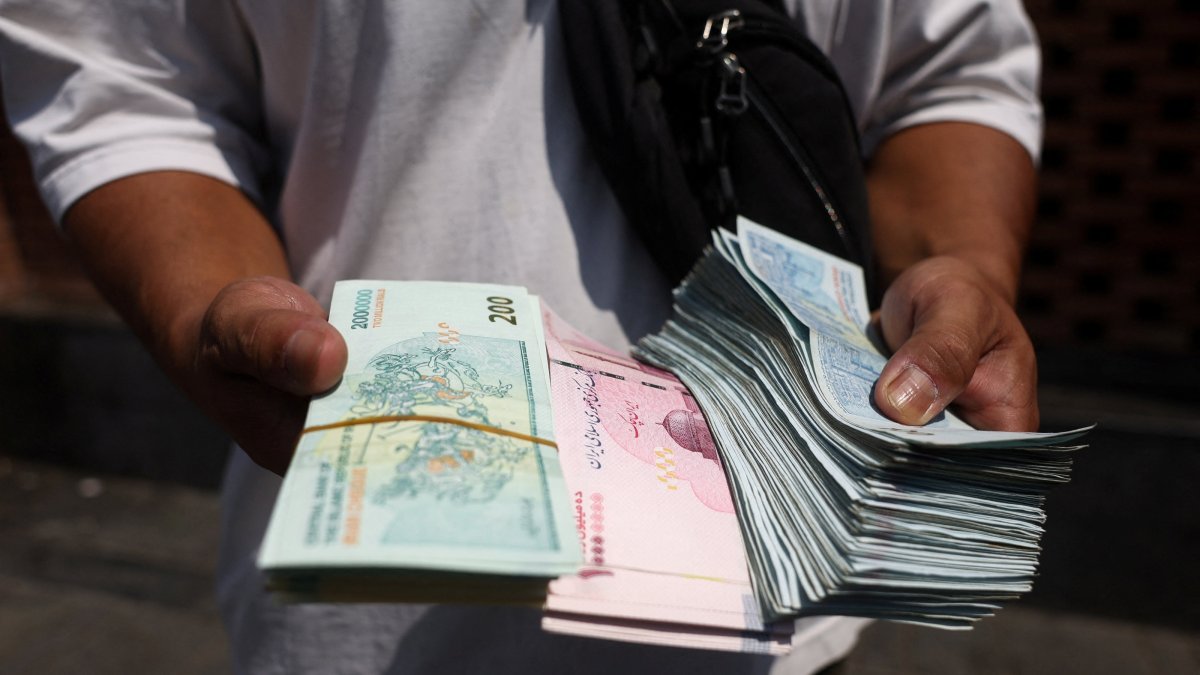
Iran’s currency has fallen to a record low of about 2.02 million rials to the dollar on the open market, compared to the official central bank rate of roughly 1.5 million. As ordinary Iranians brace for new American sanctions, the widening gap between the rates reflects dropping public confidence. Since the war with the US and Israel began, rice prices have risen by about 60% and beef prices have more than doubled, leading many households to use the black market for dollars to save their money. The IMF expects Iran’s economy to contract by over 5% this year.
Washington is signaling more pressure with new measures reportedly aimed at Iran and any country still doing business with it, threatening third parties with secondary sanctions. Iran’s foreign ministry warned that further escalation will bring consequences and that its hands are not tied, though this rhetoric has not stopped the currency’s decline.
In Tehran’s bazaars, merchants face daily price resets and evaporating margins, alongside a growing belief that there is no peace or deal ahead. This currency collapse has become one of the most visible domestic costs of the standoff, reshaping daily life more than any battlefield development.